Today was the day of the ‘Warm-up Christmas Gig’, Chris wasn’t in as he was ill, this led to a different pace to work but still efficient as ever.
We started off the day with going through our blogs and bringing them up to Chris’ standard, Jason checked through everybody’s blog whilst giving others a hand with their theory also. I sat down checked through and organised everything so it is ten times easier for the board to check and for Chris also, all I need to do now is to sort out my rehearsal diaries and answer the questions properly. Now that I have properly caught up on my regular sleeping pattern (sort of), I am now starting to pick up my slack and to get along with college life.
After this we had the warm up gig, I don’t want to go into too much detail but it went well for everybody with a few minor slip ups. Our singer and guitarist in a way messed up our final song, I was confused so me and tom kept driving the song but they kept bringing it back which was embarrassing none the least.
The videos can be found on the Fareham Music Youtube channel which consists of a playlist of each and every band from level two to the level three first years!
After that we ended the day early yet again as Jason doesn’t work in the afternoons and Chris was ill, so everyone decided to take off. I wanted to rehearse but they all wanted to go home which was great, so we agreed to have a double rehearsal tomorrow hopefully.
Our first day back went fairly smooth considering we’ve just had a week off and the rest.
The first lesson of the day was Music Business and in today’s lesson we went peer assessed and critiqued each other’s blog, but before that we went through and discussed our album reviews of Carole King’s ‘Tapestry’.
I enjoyed reading through my friend Tom’s review as it was funny but also truthful and insightful, which made my day that little bit better. Whilst going through each other’s blogs, to help Tom out I wrote down what he needs to improve and how to do it, if he needs a little help making it look better and improving his work I’d be more than happy to help!
Chris told us that tomorrow Ofsted are coming in and that we have to be on our best behaviour because they’re specifically checking out our department as Chris keeps going on about how great we are which I do not blame him for, so I am therefore looking forward to that.
After this lesson we had rehearsal, during this time we went through our set list for the Christmas concert, which went smooth considering we haven’t touched upon them in a week or so. The songs we had a bit of trouble was ‘Mercy’ by Duffy and ‘Treasure’ by Bruno Mars, we aren’t to sure how to play out the breakdowns but we can finish the songs properly so on Tuesday we are definitely going to work on that.
So when I get home I’ll take notes down for my rehearsal diary at the end of the week, and I will go over our songs a handful of times so I am able to improve a lot quicker than the others.
Today was pretty lacklustre being a Wednesday in all, within D.I.S we chose to rehearse as three and go through our songs again without our singer because she wanted to catch up with her blog. In the other band I am in we have agreed to do ‘Year 3000’ by Busted which will be fun and an easy song to chug out in general.
After we had gone over our songs as a band, I then had a guitar lesson which is always interesting we went over everything that was given to us previously and a grade 6 booklet to look over during half term which will definitely occupied.
At lunch, Jason kindly came over to the library to check my stylistic analysis work and to have a chat which I always enjoy. I now know what I need to work on to complete this work and to take it further than the state it is in at the moment.
Afterwards we had Aural Perception with Chris, which I’ve grown to enjoy and I am obviously getting better each time we have the lesson and when I listen to music whilst writing up my many works which often makes me side tracked but that’s more than fine to work through amongst the chaos.
Chris then kindly finished up the day with restringing my bass which I have been looking forward to subtly all week, during that time Jason came in and looked through my blog which he enjoyed whilst having an entertaining chat with Chris non the least. When Chris was done and Jason had to go I double checked I had everything and went home for the half term ahead of me!
My weekend went well considering how terrible the weather was. But besides it being wet and cold, I enjoyed listening to the heavy downpour for some reason it’s always been relaxing to listen to. I used to enjoy hearing it when I was back at secondary working on my music theory with Ben which is nice to reminisce on.
This morning in Music Business, Chris went over that the cut off point was today and that everyone else is safe and that he’s now expecting everyone to work at their full capability. After that, we watched a video of a great band called ‘The Tower Of Power’ the song in question is called ‘The Soul Side Of Town’ which I personally enjoyed being into Funk and all that other fun stuff.
After that Chris said we had our one to ones today so for the final twenty minutes or so of the session he went off to his office whilst he eventually got through every ones blogs and asking each and every one of us how we feel, etc.
After that, we had rehearsal which is always, in my initial band our singer was at a funeral which is sad to hear and my thoughts go out to her.
But I spent most of my time with the other band Chris has put me in to play the guitar in which is a challenge but fun none the lease, we started to come up with an original song and went through ‘Lucky Man’ by ‘The Verve’ which is fun the other guitarist/vocalist has totalled his fingers so I had to play his part rather than the lead part which went well, then after that we had lunch.
After we went through that song we began on the original piece and came up with an upbeat chord progression that Jason previously helped us out with which I remembered from a couple weeks back, now it’s up to our vocalist to come up with something to go with it!
When lunch was finished, we had directed independent study, but I didn’t know what to do as I’ve done a hell of a lot over the weekends as I have no social life quite frankly, so me and Tom went to talk to Chris and he told us to rehearse now so the others can leave early and for me to go have my one to one after which was fun times, Chris enjoyed my blog and my progress and we talked about many fun things including Les Claypool.
After that Chris came back over to music with me and we worked with my other band because the setlist was a mess and the bassist wasn’t in, and we agreed to do ‘Red Red Wine’ by UB40 which is a good tune, after that it was the end of the day and we went home.
I have training tonight so I’m going to be either totalled tomorrow morning or in the mood to destroy, so we shall wait and see…
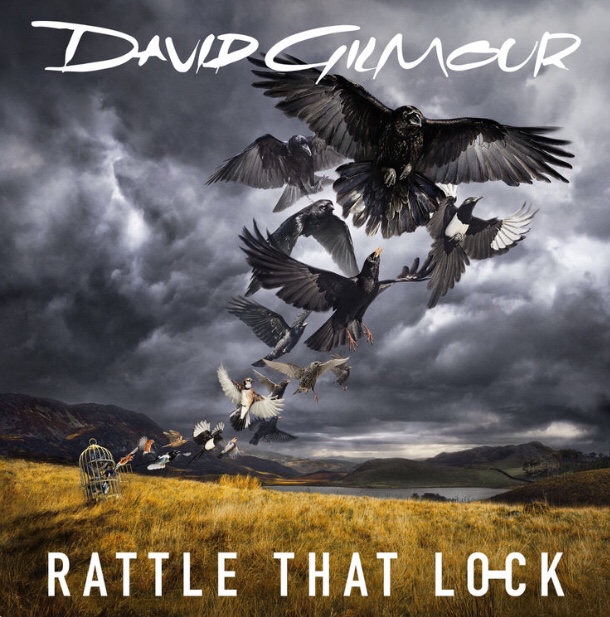
It is the fourth solo studio album byPink Floyd singer and guitaristDavid Gilmour.
It was originally released in September 2015, on the record label Columbia.
The genre of the album would be considered all of the three in which being Rock, Jazz and Ambient, and the album lasts for 51 minutes roughly!
Gilmour completedshort tours around Europe in September and October 2015 and South America in December 2015 to support the album, with a similar tour of the United States and Canada following in March and April 2016.
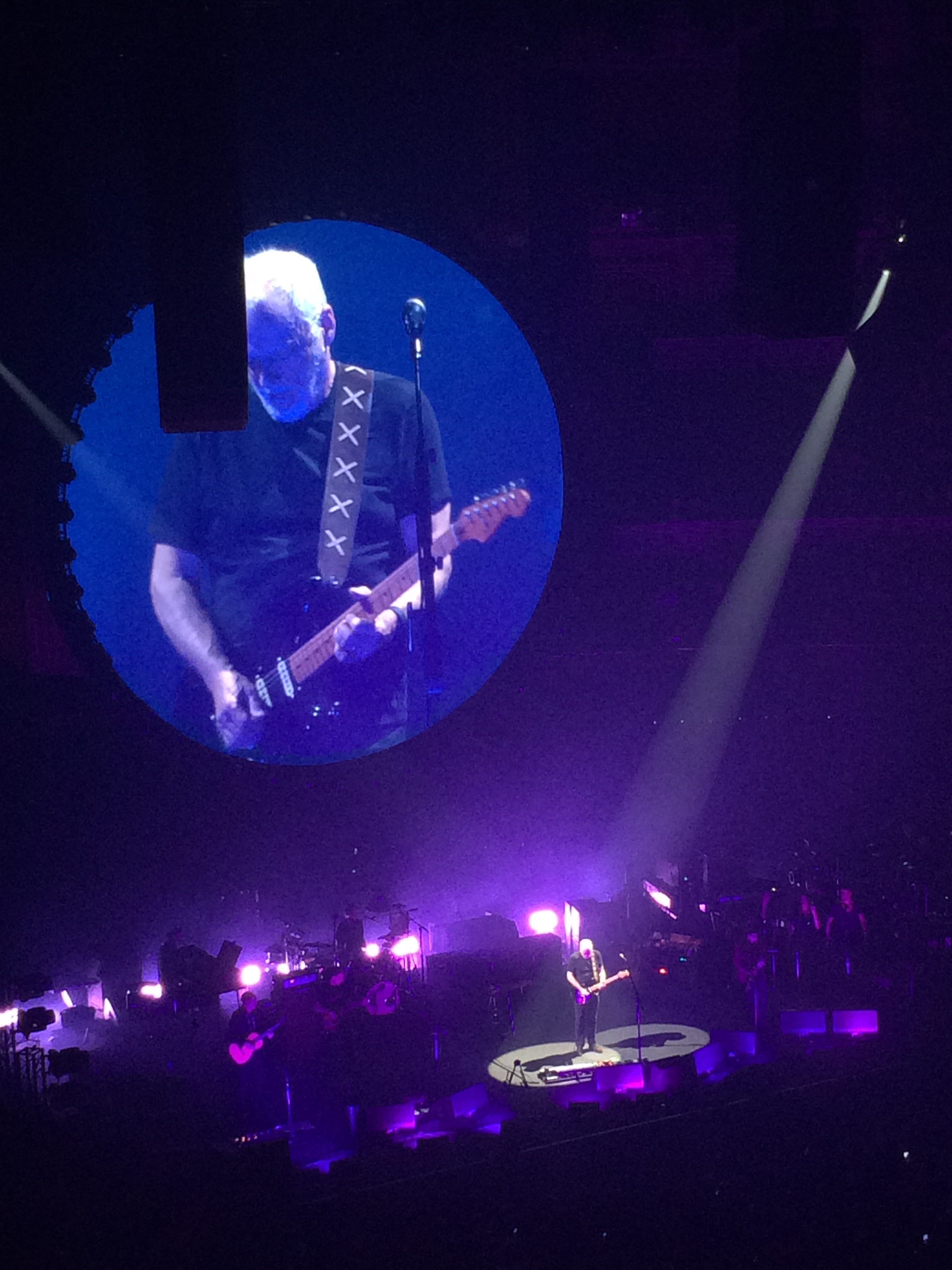
During his short tour around Europe, as previously mentioned I saw him at the Royal Albert Hall which was amazing for my first ever live music event!
The artwork for the album was created by Dave Stansbie from The Creative Corporation under the direction ofAubrey Powell, who has worked with David Gilmour and Pink Floyd since the late 1960s!
By any Pink Floyd Fans standards,Rattle That Lockis definitely worth setting aside the time to listen to properly to experience its inner meaning.
With lyrics by his wife Polly Samson, who has had a massive influence upon this album, Gilmour reflects heavily on an aspect of time passing by and the urgency to live what’s left to the fullest, which explains the opening with his creeping-dawn guitar overture ‘5 A.M’.
And the morning-train glide of the title track. The flow of moods — the waltz ‘Faces of Stone’; the jazzy-youth memoir ‘The Girl in the Yellow Dress’ (with distant bleats of cornet by Robert Wyatt); the martial rock, ringed with light, of ‘Today’ — is striking and effective, recalling the hooks-and-choruses side of 1971’sMeddle by Pink Floyd.
One of my favourite tracks off of the album would have to be ‘A Boat Lies Waiting’ with sighing harmonies by David Crosby and Graham Nash, and a mumbled monologue similar to that on ‘The Great Gig in the sky’ – is dedicated to late keyboardist Richard Wright so this may be Gilmour’s own life on display summarised within a spectacular album.
But Gilmour is, inevitably, most eloquent here as a guitarist, if it wasn’t for his playing and musicianship I wouldn’t be here today at Fareham Music.
In the iconic arcs of silvery treble illuminating the instrumental of one of the final tracks ‘Beauty’, the guitarist sounds like an expressive master of his craft, one who hasn’t aged a day.
And on that note, I definitely recommend setting aside to experience this album in full if you’re a fan of David Gilmour and Pink Floyd, or into Rock and Jazz because it’s bloody brilliant all round!
One of the most talented and electric bass players out there, Les Claypool, lost half his hearing in one ear during a diving accident in 1993. Les Claypool grabbed my attention more than a month ago with his fun take on finger tapping and flamenco style strumming in the band, Primus and his many other side projects like Colonel Les Claypool’s Fearless Flying Frog Brigade.
He mentions his hearing loss in an interview on JamBase.com:
“Moving back to you personally, I believe I read that you lost hearing in your left ear, is that correct?”
“In my right ear. Some of my high frequency from a scuba diving accident.”
“Does that affect your bass playing in any way?”
“Not really. It affects me socialising with large groups of people. It’s hard for me to discern syllables sometimes. Like if there are a lot of people talking, especially women’s voices, I just can’t hear. So I try to kind of aim my left ear at people.”
Within other interviews from two years ago whilst he goes on to explain about his own soft drink called SeaPop.
He then goes on to explain how the drink got its name and why it is what it is, The bass virtuoso says the drink is “like a ginger-snap dipped in vanilla ice cream” and that it’s here to “mellow things out in a world saturated with energy drinks.”
Claypool says: “Years ago I accidentally ruptured my inner ear scuba diving off the California coast and since that day I’ve found myself a bit more susceptible to the adverse effects of motion.
Considering all of the following that Les Claypool has experienced it’s important to learn from another musicians mistakes. As musicians, we spend long hours practising and improving our skills. While our polished musicianship is valuable, our sense of hearing is often overlooked as what it is—the essential and irreplaceable tool for music-making.
Many professional and aspiring musicians instinctively understand that they are at risk for hearing loss from lifelong exposures to loud music. Rarely discussed, however, is that the risk includes developing other hearing disorders such as constant ringing (tinnitus), degraded pitch perception (diplacusis), or intolerance of loud sounds (hyperacusis).
Practical solutions can reduce the risk of music-induced hearing disorders without compromising the quality of your performance. In addition to the potential long-term benefits to your hearing, the following tips can reduce unnecessary stress on your auditory systems and can even improve critical listening ability.
Rehearsal Management
Consider the duration and venue of solo practice sessions and group rehearsals, which generally account for the vast majority of one’s musical activities. While public performances are planned and relatively predictable, rehearsals are often held in varied locations with inconsistent access to proper monitoring equipment.
Strategically plan the rehearsal schedule to consider your overall sound exposure. For example, reduce the time spent on louder sections or songs, or allow breaks between intense selections to avoid fatigue.
Evaluate the acoustics of rehearsal venues. Professional rehearsal spaces and acoustically treated rooms can drastically improve listening clarity and support lower rehearsal levels.
Introduce alternative rehearsal formats such as unplugged sessions that limit the use of amplification. Large groups may benefit from holding smaller, sectional rehearsals.
Discourage “noodling” during conversations and between songs. This reduces constant sound levels and listener fatigue and improves productivity.
Use of Hearing Protection
When sound levels are consistently high and non-technological solutions aren’t sufficient, try using a pair of universal-fit filtered earplugs designed for music listening. While traditional foam earplugs will help keep your ears safe, they have the drawbacks of providing too much sound protection (attenuation) for most musical applications and have a poorly balanced frequency response.
For a long-term option, consider custom-fit filtered earplugs, which provide a flatter frequency response, changeable level options, and improved comfort for extended use.
When using hearing protection, it is important to practice listening and playing at lower sound levels. Listening to lower levels can actually improve pitch and loudness perception since your auditory system can distort subtle details at sufficiently high intensities.
Use hearing protection when doing other activities and chores, such as operating loud tools and equipment, attending concerts or sporting events, motorcycle riding, and using recreational firearms. Save your ears for what matters—music-making.
Effective use of Monitoring Systems
Strive to reduce the duration or intensity of sound exposure. Assuming that the rehearsal or performance duration remains consistent, reducing the monitoring and stage levels is the next step.
Try to first address the direct sound sources where adjustment won’t compromise the sound quality. Depending on the situation, some options are to turn down instrument amplifiers and use clear and transparent sound barriers around drums.
When on stage, work with your sound engineer to reduce extraneous signals and set a lower monitor speaker level.
Consider the use of an in-ear monitor (IEM) system to replace the traditional wedge monitor system. IEMs are beneficial for certain musical styles and stage setups to better control personal monitoring levels and improve clarity. While not hearing protection devices on their own, IEMs can help reduce a musician’s risk of hearing damage when coupled with an informed reduction in monitoring levels.
These tips all vary within cost, time commitment, and effectiveness in different musical situations. No two musicians have identical needs so it would be ideal for everyone on my college course to speak with our band mates, engineer, about your specific circumstances. Having an annual hearing test to monitor the efficiency of your hearing conservation efforts would also help us as young aspiring musicians also to assure our hearing won’t be lost due to silly mistakes. By treating our ears as the invaluable, irreplaceable assets that they are, we can all take important steps at Fareham Music to improve our performance while reducing the risk of a career-limiting hearing injury.
I’ve brought this issue up because after a month of rehearsing and practising daily that it’s become more of a struggle to hear others in a conversation with background music and or sound, whilst in comparison to what I was like in secondary. To prevent further loss of hearing and to stop developing issues I’ll speak to my lectures and bandmates to fix this ongoing issue but I will also begin to use earplugs more often, when I used them previously in rehearsal I couldn’t hear myself just the guitarist which was handy but this will definitely be my top priority leading up to the Christmas Concert!
Despite rise of legal streaming, a substantial number of listeners still rip music from sites such as YouTube for offline listening.
More than one-third of global music listeners are still pirating music, according to a new report by the International Federation of the Phonographic Industry (IFPI). While the massive rise in legal streaming platforms such as Spotify, Apple Music and Tidal was thought to have stemmed illegal consumption, 38% of listeners still continue to acquire music through illegal means.
The most popular form of copyright infringement is stream-ripping (32%): using easily available software to record the audio from sites like YouTube at a low-quality bit rate. Downloads through “cyberlocker” file hosting services or P2P software like BitTorrent came second (23%), with acquisition via search engines in third place (17%).
Stream-rippers told the IFPI that their primary motive was being able to listen to music offline without paying for a premium subscription to the likes of Spotify and Apple Music, most legal subscription services I am aware of charge around £10 a month to listen without adverts.
The IFPI estimated that YouTube represented an annual revenue of less than 76p per user, compared to £15 on Spotify, and concluded that user upload services are not returning fair value to the music community.
David Price, the director of insight and analysis at IFPI said that very little stream-ripping was happening on streaming services such as Spotify and Apple Music, and that these services could do little more to attract people towards paying for subscriptions: “There is no better way of consuming music, full stop. It is very difficult to imagine how they could become more user-friendly.” He instead put the blame on “the large video platforms like YouTube” for not doing enough to prevent piracy.
“There are certain areas where they could improve on the security front, such as better encryption,” he said. Stream-ripping sites often involve simply entering a link from YouTube, with the sites then generating a free MP3 file from the link to illegally download. “There’s no way of giving sites a link from Spotify or Netflix and getting an immediate download, but you can do that for some of the large video platforms,” David Price explained.
“This is a game that is easy for a lot of these sites to play. It’s not like setting up a torrent site like the Pirate Bay, where you’ve got to collect all this content and curate it to some extent. You’re basically offering people access to music that is already uploaded elsewhere.”
Thirty-five percent of listeners who do not use a paid-for streaming service said everything they want to listen to was on YouTube. This will change following the approval last month of Europe’s copyright directive, designed to update copyright legislation for the digital age. Article 13, of the legislation makes social media platforms responsible for the prevention of users sharing copyrighted material.
The IFPI surveyed a representative sample of 16 – to 64-year-olds in 18 countries, including the UK, South Korea, France, the US, Brazil and South Africa, who make up the vast majority of global music consumption.
All sectors of the British music community have come together with BBC Music to proudly announce a new annual event – the first-ever ‘National Album Day’ on Saturday the 13th of October.
National Album Day will mark the culmination of a week-long series of events and activity around the country that will celebrate all aspects of the UK’s love of the album – new releases and classic recordings across all genres of music. It will also pay tribute to the sleeve artwork that contributes to the album’s iconic appeal. This inaugural event comes in a year that coincides with the 70th anniversary of the album.
Planned activity will include dedicated BBC Music programming and editorial support; retail events and artist personal appearances; Classic Album Sundays LP playbacks and artist interviews/fan Q&As; and online listening parties. A social media campaign (@AlbumDayUK / #NationalAlbumDay) will invite people to nominate and share the album that has most inspired them; and at 3.33pm on the 13thOctober – National Album Day – fans, stores, radio stations and public spaces will be invited to play their favourite album in full.
Leading the ‘national conversation’ will be the artists and producers who give expression to the album as a conceptual body of work, and help to define the format’s purpose and meaning. Numerous musicians are giving National Album Day their backing, while others will be confirmed in due course.
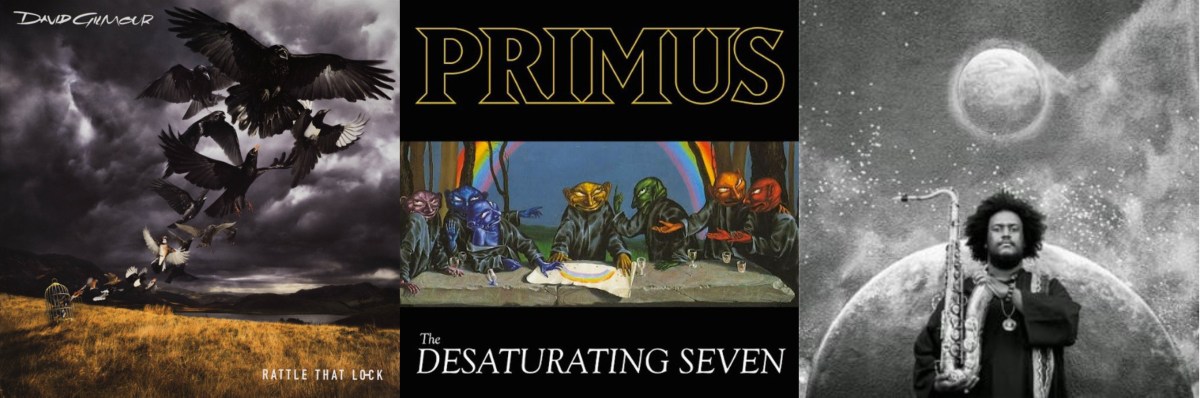
Personally I will be nominating a few albums that have inspired me and they’re the following.
‘The Desaturating Seven’ by Primus
‘Rattle That Lock’ by David Gilmour
‘The Epic’ by Kamasi Washington
All of these albums have helped my craft massively and formed me as the musician I and others know today. I hope everyone will be enjoying this day as much as I will especially the others on my music course!
Within the music industry there are many aspects and roles that contribute to it behind the scenes to the public eye. One of the aspects of the industry is the live production of music, there are many people involved in the organisation and also the delivery of live music happening each and everyday roles like the following.
Sound Engineers
Security
Box Office
Hospitality
Stage Manager / Stage crew
Camera crew
Support act / slot
Lighting Engineers
Musicians – backing singers and session musicians
Hair and Makeup
Primus were filmed live at The Capitol Theatre on Sunday the 29th of October 2017 at 8:20PM, this is what I’m going to be basing my example off of as it’s perfectly demonstrates some of the key roles needed for this performance to go as smooth as it did.
Produced + Directed by: Jonathan Healey
Producer: Brad Sands at Red Light Management
Executive Producer: Peter Shapiro
Camera Operator: Dave Brown
As seen within the video of the performance the band have worked closely the production team to achieve the image they want to put out within the music industry.
To start off with the lighting engineers and technicians, throughout the set they are constantly change colour and the direction they are shone within this helps to set the mood of the song that’s being played and how the song is also progressing.
Lighting engineers have high-level skills to prepare, rig, operate and maintain stage lighting systems and electrical effects during live performances. Lighting engineers work closely with lighting designers, sound engineers, the director and the stage manager to combine their skills and help create the best live experience that pleases both the band and the audience.
During Primus’ set the atmosphere changes massively song to song, at the start of their first set they started off with ‘Mr Krinkle’ and the onstage presence is very dark and ominous which best suits the sound, the lyrics and Les Claypool’s stage appearance for this particular song.
But a couple of songs later, the mood changes when Primus play ‘Jerry Was A Race Car Driver’, the stage lights up progressively throughout and gets a lot heavier during the breakdowns and they also stop when the song pauses before Les Claypool says ‘Dog will hunt.’
This just shows how much preparation and time took to maintain and sustain the electrical effects during the live performance along with the sound engineers, the director and the stage manager.
As a sound technician, it’s their responsibility to assemble, operate and maintain the technical equipment used to record, amplify, enhance, mix or reproduce sound during a live performance. They’ll also need to identify the sound requirements for a given task or situation and perform the appropriate actions to produce the sound that the band want to produce for the audience and themselves.
However, they may also be responsible for setting up audio and mixing board equipment for event and or production. The duties of a sound technician vary according to the industry in which they are employed. Sound engineers often assist record producers also to help give their work the sound they are hoping to achieve.
They’re all types of audio engineers that help out at live audio events as it takes a lot of people to produce a very good out come just like Primus did, here are just a few examples.
Live Sound Engineer – A live sound engineer works at live events to make sure the sound is of appropriate value and high quality.
Monitor Engineer – A monitor engineer works with live sound engineers to help the performers at a live event hear themselves.
Systems Engineer – A systems engineer manages the entire experience of sound at live performances. Systems engineers manage both live sound engineers and monitor engineers, and also work to set up the entire live sound system at many live events.
Audio Post Engineer – An audio post engineer works to mix and edit audio for television and movies.
With all these factors and people combined the lighting technicians and the sound technicians help to dynamically convey the delivery of music to Primus’ audience, however there are still a lot of people that helped organise how this gig was going to play out.
Stage managers have several key responsibilities and tasks to perform in each phase of a production, including: scheduling and running rehearsals. They also coordinate the work of the stage crew and or stage hands, this is done by calling cues and possibly the band members entrances at the beginning of the performance.
Stagehands, also known as stage technicians or crew, work backstage with scenery, props and special effects in theatrical productions and live concerts. They play a vital role in any performance, by knowing exactly where and when to move objects, instruments and scenery in which that the band needed whilst performing song to song.
Yet again, during the first set whilst Primus were performing, Les Claypool was playing with his usual array of basses, but for ‘Mr Krinkle’ and ‘The Valley’ he uses a Ned Steinberger 5-String Electric Upright Bass.
Swapping between his vast collection basses would be the stagehands job to do it before the Que is given to the lighting engineers to light the stage back up again after the change is made, as seen in the video it’s been done fairly efficiently and done with no trip ups.
One of the last but most important role within the industry is security, within recent times it’s became apparent that security is an even more important role than ever within recent years due to such events as the Manchester bombing and because of this over the past year it has put the music industry on high alert. A number of promoters say that security expenses increased as much as 20 percent following Grande’s concert and that costs are rising another 10 to 15 percent in 2018.
Door Supervisors have specialist training to perform specialist functions. At live music venues these currently include all types of security, such as; front of stage pit teams, undercover anti-theft teams, undercover drug detection teams, drug detection dog units and personal searching specialist.
They staff some of the most critically important positions at concerts and sporting events and are there for the safety of everyone attending. Because crowd management and security is a top priority for events and venues, a large number of event staff members are needed to oversee this important task. These crowd management employees have received training in the field but are not formal law enforcement officers. Simply put, they keep things in order and respond when an incident gets out of hand or needs mediation.
But, without all of these roles we wouldn’t be able to produce quality live music for the public and it just goes to show how vital each and every aspect truly is!
If I had to do any of the following roles, I think I would choose to be a Sound technician and or a stage hand/manager, there any many different types of sound engineers also which all play a vital role with the delivery of live music.
But out of all of them I’d like to be a live sound technician because I’ll be able to ensure the quality of the sound and make sure it’s to a good quality that the audience have paid for.
On average a live sound engineer gets paid around about £25,000 to £40,000 a year which is a reasonable amount of money to do something I’m passionate within, the hours you’d work would be varied constantly which may become a pain at times if you want a social life within the evenings, but it would heavily rewarding most of the times because I’d be helping to produce a bands image and or vision, especially when it comes to Primus.
I’ll definitely need a good knowledge of music and sound technology, and I may find it useful to also have an understanding of physics and electronics.
I’ll definitely need a good knowledge of music and sound technology, and I may find it useful to also have an understanding of physics and electronics.
Having a degree with any of the following will help me to achieve this job,
a course in technical theatre, music technology or sound engineering
a degree or diploma in technical theatre accredited by Drama UK.
It would be useful also if I have paid or unpaid work experience, like:
Helping backstage in a theatre
Being a roadie for a band
Rigging sound in amateur or student theatre, or for local bands
Recording or mixing music, for example as a DJ
Working for a sound equipment manufacturer or hire company
I’ll definitely need these attributes:
Good hearing, for judging sound quality
A good sense of pitch, timing and rhythm
Patience, stamina and good concentration
The ability to cope with long hours and tight deadlines
I’ll also have to mix the inputs from microphones and amplifiers, using a control desk to balance the sound levels. You might also provide background music and sound effects.
My duties might also include:
Discussing the production’s sound needs with the director or sound designer
Identifying places in the script where any sound effects, music and changes in sound level are needed
Pre-recording any sound effects and music
Positioning and rigging up microphones
Completing sound checks before a performance
Operating the sound desk during shows Following a sound plan (known as a ‘plot’) and cues from the deputy stage manager
Looking after and repairing equipment
Unloading, setting up, dismantling and loading equipment at each venue when on tour
I may also have to set up and operate lighting equipment as part of a sound and lighting crew.
Whilst doing some research I found out that the salaries for live sound engineers are the following within our country.
Starter: £25,000
Experienced: £30,000
Highly Experienced: £40,000 (sound designer)
Freelance rates would vary from this research. You could always negotiate fees based on the type of production and your own track record. The Broadcasting, Entertainment, Cinematography and Theatre Union (BECTU) list suggested rates.
Working hours, patterns and environment.
Hours can be long and irregular.
Evening and weekend work is common.
You may also work during the day for rehearsals, sound checks and maintenance.
You’ll work in theatres, concert halls, arenas, and outdoors at concerts and festivals.
You’ll spend a lot of time sitting at a control desk.
You’ll travel throughout the UK and possibly overseas.
With the following experience, I could always progress to chief sound engineer in a theatre, become a sound designer, or set up my own sound services company which would be quality but it is up to me what my future can hold!
In Rehearsal today, we went over ‘Treasure’ by Bruno Mars in rehearsal today by request of me, finally, the song was composed in common time and in the key of E♭ major with a tempo of 112 beats per minute. The chord progression of A♭m7–(Gm7)–Fm7–Gm7–Cm–(B♭) repeats throughout the song, changing only to end phrases on B♭9sus (A♭/B♭), a deceptive Cadence. I enjoy the song because of how upbeat it is and the style in which the bass-line is played, I haven’t been able to play anything slapped and popped but now I have the perfect opportunity as Disco is where it’s at!
In Composition, Chris had told us to start a new 30 second piece based on ‘How you see yourself” which was interesting, because I am pretty the overall outcome was doom and gloom. I’m finally the hang of Logic X at the start of term was fairly difficult to get into, but I will be sure to improve all my compositions before I have to submit it to Chris. This composition consisted of a Finger style bass because playing with a pick isn’t the way to go, studio cellos, a ‘slow jam’ drum kit and a soundscape sound called ‘Metal World’ which helped create the edge that I see myself in me.
After Composition, we had Pop Music in Practice with Jason which I always enjoy now that I know what I’m doing and have confidence to ask Jason for help. In today’s session I finished going through the background and arrangement to ‘Mercy’ by Duffy, I think it is to the best of my standards but that’s always open to change. I started to go through ‘Treasure’ by Bruno Mars also, I started to go into the background of Disco as a genre which is the most interesting one yet along side soul, to me at least; but I will definitely work on it a lot more tomorrow and over the weekend, because tomorrow the lectures have safeguard training which is interesting to me as I’d like to be a teacher one day.
After lunch we had Rehearsal again, so we proceeded to go over the structure of ‘Treasure’ which is always fun to do at the end of the day. We went through the song a handful of times because our singer was trying to figure out what key she was going to be comfortable with, after a few times me and drummer locked down the groove so it’s now up to our guitarist to learn his part up to scratch then that should be another song in the bag!



 Ellie Thornton Music