The Importance of Copyright in the Music Industry

In the UK, copyright lasts for a period of 70 years from the end of the calendar year in which the author dies. If the music originates from the outside of the European Economic Area (EEA), the copyright in its country of origin, if this doesn’t exceed 70 years. 

There are several types of Copyright Relevant to Music and here are the following:

Intellectual copyright is protection for anything you create that stops others using it unless they have your permission. Copyright is established as soon as you create any of the following things; original literature, drama, music, art and photography, original software, web content and databases, sound, music, film and television recordings, broadcasts and the layout of published music, drama and written works.

Your work be marked with the proper copyright symbol (©), it is however not required and does not affect the state of the copyright you have on something. Copyright lasts from when it is created until the death of the creator plus varying lengths after the creator’s death depending on what type of art it is. For written, dramatic, musical and artistic work this is 70 years, for sound and music recordings this is 70 years after the first publishing, for films this is 70 years after the death of the director, screenplay author and composer, for broadcasts this is 50 years after the first broadcast and 25 years from the first publishing of layouts for written, dramatic or musical works.

By having copyright for something you now have prevention from; people stealing and copying your work, selling or otherwise distributing it, renting out copies of it, performing your work (in public), adapting your work and putting it online. If you own copyright you have the right to sell it and can register the copyright with a collecting body who will collect any royalties for you and agree on terms for its use on your behalf. You can sell or transfer your copyright by signing an agreement. 

Sound recording copyright is represented by the ℗ symbol. It is used to show copyright for a sound recording. The ‘P’ stands for phonogram, this word is used to refer to sound recordings. It would contain the symbol, the year the sound recording was first published and some way of identifying the owner of the copyright. Copyright in sound recording usually is owned by the record producer. Like with intellectual copyright, sound recording copyright has specific rules to it regarding how long it lasts, this is dependent on whether or not it has been published or communicated in some way (such as radio or internet) to the public.

If a recording is not communicated to the public in anyway, nor published, the copyright will last for 50 years. If within 50 years of its initial creation it is published then the copyright lasts 70 years from the year it was first published. If within 50 years of its initial creation it is communicated to the public but not published the copyright will last for 70 years of when it’s first communicated. If it is then published at a later date the copyright will last for 70 years from when it’s first published. 

Performer’s copyright refers to the rights of the performer within sound recording copyright. If a recording is not communicated to the public or published then the performers copyright lasts 50 years from when it was first made. To be eligible for performers copyright the performer must be a qualifying individual or perform in a qualifying country. If someone makes a copy of a performers performance without the relevant permissions then they are infringing the performers rights.

Digital Rights Management is the term for the type of technology that allows the rights owners the ability to set (and enforce) terms to which other people can use their intellectual property. Usually these rights owners would be copyright-holding companies such as music, film or software publishers. The way DRM works is by encrypting a file and then having an authentication system to unlock said file. DMR is most commonly used for the protection of copying. This level of technology gives reassurance to copyright holders that their works will not be pirated. 

Piracy is intentional infringement of copyright on a commercial scale. In the 1990s compact disc piracy became global due to technology making duplication of CDs easier coming out. Piracy these days involves mp3s being distributed on sites like piratebay and limewire, often at a lower audio quality than if the music was actually purchased from a respective distribution company.

Due to modern technology making piracy so easy this is why it is increased so significantly. It is easy for someone who has paid for a piece of music to simply upload the file to a pirating site for others to download. Due to the large amount of people who do it, it is also hard for the government to police music (and any other media) pirating it’s done on such a large scale. It is still illegal though and if caught pirating material you could be fined up to £150,000 for each individual file as well as up to 5 years in jail. This doesn’t deter a lot of people though due to it being so hard to catch people.  
Illegal downloading is when someone downloads a piece of music illegally without paying for it, essentially you’re infringing the copyright of the person(s) music you download.
Making Money In The Music Industry – Royalties

Within the Music Industry as a singer, songwriter or composer you will always be entitled to receive royalties due to the exploitation of your musical work. Therefore, every time your music is played you should make money, their is a handful of ways to make money from music like the following:

  • Synchronisation Royalties – When your works are used in TV, Film, Advertisements, Video Games, online streaming, and any other type of visual media.
  • Mechanical Royalties – They are generated for the physical or digital reproduction and general distribution of copyrighted works. This applies to all music formats such as vinyl, CD, cassette, digital downloads, and streaming services such as Apple Music, Spotify, Amazon Music and Soundcloud.
  • Public Performance Royalties – These royalties generated for copyrighted works Performed, Recorded, Played and or Streamed in public. This also includes Radio, TV, Bars, Restaurants, Clubs, Live Concerts, Music Streaming Services, and anywhere else where music plays in public.
  • Print Music Royalties – They are not a very common form of payment a owner can receive. This applies to the copyrighted music transcribed to a print piece such as sheet music and then distributed amongst musicians. Additionally, these fees are often paid out to the owner which is determined upon the number of copies made of the printed piece itself.

In the UK there are four collection societies, all in their own ways vary from the other and here are the societies below:

MCPS (Mechanical Copyright Protection Society) – This society collects where Mechanical Royalties are payable, Record Companies must distribute details of all copies made each month to the collection society, the record companies will pay the MCPS quarterly and in return the MCPS enables the payment of royalties to the writers and or publishers of the music produced. They are a non-profit organisation which is funded by the commission it levies on the licence revenue it receives.

When going to apply as a musician, there is a one-off fee of £100, when you have joined as a ‘writer’ they will collect your royalties for you. When you have joined you eventually appoint them as the agent of your rights whereas when you join the PRS you assign your rights to them. They collect where your royalties are due for you on a monthly basis, however they will charge you admin rates for their service, this will ensure that the MCPS receive a small profit for their services, their admin rate is the lowest for collecting societies across Europe and the UK, charging around about 10% out of your royalties this is totally dependant on what type of royalties they are receiving from you.

As an MCPS member, they act on your behalf administering the rights to the following:

  • Copies of your work, pressing CDs and creating digital downloads.
  • Issuing copies of your work for sale and or promotion
  • Renting or lending your work to the public.

PRS – Better known as the Performing Rights Society sell blanket licences to venues that play and or broadcast music to the public for a profit through enjoyment.

As a Musician and or Composer you are entitled to royalties every time you perform your music for entertainment purposes and every time your music is played at any form of profitable establishment and business such as; shops, music venues, clubs.

When you have a Blanket Licence it means as a venue, under one annual fee relevant to the venue, can now play and allow performance of all music under the licence without a limit to use under the one year agreement fee. 

Keep in mind that you’re only entitled to royalties if you have a PRS Licence, to join the PRS as a ‘writer’ there is a one-off fee of £100, just like the MCPS. PRS collect your royalties as and when your music is
played in public, this also includes live performance, Radio and TV broadcasts, films and adverts, streaming and downloading, ringtones and hold music for phones. They can then monitor any kind of music use and then they can collect any due royalties. 

PPL – the Phonographic Performance Limited Collect royalties for the copyright and sound/recording, they now sell a licence called “TheMusicLicence”. This enables businesses to play music for their customers/employees from the TV, Radio and any other digital devices or possible live performances.

This licence allows businesses to play music and to re-ensure that the musicians obtain their royalties when their music is played. There are many determining factors to how much a “MusicLicence” will cost here are the following:

  • The type of venue.
  • What circumstances you use music for on a daily basis.
  • If it is being used for background music or specifically for entertainment purposes only.

VPL – the Video Performance Limited collect royalties for all forms of videos this would come in to play massively during our modern day and age especially when it comes to YouTube and or any other media platforms.

They specifically deal with the licensing of music videos when they are played or broadcasted on TV. The VPL have a database you can search to track information on music videos. VPL are within the same building as PPL so generally if you need to inquire about gaining royalties from a music video you will contact the PPL as those terms fall under TheMusiciansLicence.

Music Business, Primus, Roles within production and delivery of live music.

Within the music industry there are many aspects and roles that contribute to it behind the scenes to the public eye. One of the aspects of the industry is the live production of music, there are many people involved in the organisation and also the delivery of live music happening each and everyday roles like the following.

  • Sound Engineers
  • Security 
  • Box Office
  • Hospitality
  • Stage Manager / Stage crew
  • Camera crew
  • Support act / slot
  • Lighting Engineers
  • Musicians – backing singers and session musicians
  • Hair and Makeup

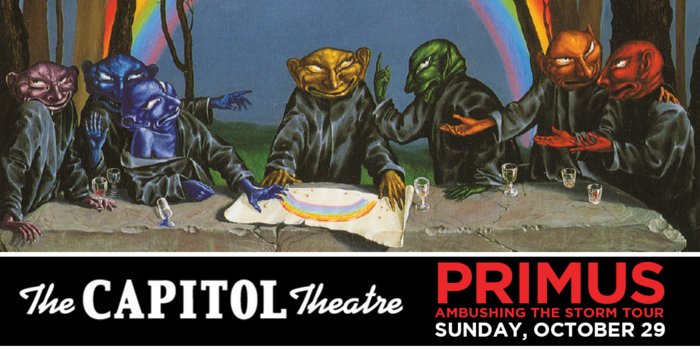
Primus were filmed live at The Capitol Theatre on Sunday the 29th of October 2017 at 8:20PM, this is what I’m going to be basing my example off of as it’s perfectly demonstrates some of the key roles needed for this performance to go as smooth as it did. 

  • Produced + Directed by: Jonathan Healey 
  • Producer: Brad Sands at Red Light Management
  • Executive Producer: Peter Shapiro
  • Camera Operator: Dave Brown

As seen within the video of the performance the band have worked closely the production team to achieve the image they want to put out within the music industry.

To start off with the lighting engineers and technicians, throughout the set they are constantly change colour and the direction they are shone within this helps to set the mood of the song that’s being played and how the song is also progressing.

Lighting engineers have high-level skills to prepare, rig, operate and maintain stage lighting systems and electrical effects during live performances. Lighting engineers work closely with lighting designers, sound engineers, the director and the stage manager to combine their skills and help create the best live experience that pleases both the band and the audience. 

During Primus’ set the atmosphere changes massively song to song, at the start of their first set they started off with ‘Mr Krinkle’ and the onstage presence is very dark and ominous which best suits the sound, the lyrics and Les Claypool’s stage appearance for this particular song.  

But a couple of songs later, the mood changes when Primus play ‘Jerry Was A Race Car Driver’, the stage lights up progressively throughout and gets a lot heavier during the breakdowns and they also stop when the song pauses before Les Claypool says ‘Dog will hunt.’ 

This just shows how much preparation and time took to maintain and sustain the electrical effects during the live performance along with the sound engineers, the director and the stage manager. 

As a sound technician, it’s their responsibility to assemble, operate and maintain the technical equipment used to record, amplify, enhance, mix or reproduce sound during a live performance. They’ll also need to identify the sound requirements for a given task or situation and perform the appropriate actions to produce the sound that the band want to produce for the audience and themselves.

However, they may also be responsible for setting up audio and mixing board equipment for event and or production. The duties of a sound technician vary according to the industry in which they are employed. Sound engineers often assist record producers also to help give their work the sound they are hoping to achieve.

They’re all types of audio engineers that help out at live audio events as it takes a lot of people to produce a very good out come just like Primus did, here are just a few examples.

  • Live Sound Engineer – A live sound engineer works at live events to make sure the sound is of appropriate value and high quality.
  • Monitor Engineer –  A monitor engineer works with live sound engineers to help the performers at a live event hear themselves.
  • Systems Engineer – A systems engineer manages the entire experience of sound at live performances. Systems engineers manage both live sound engineers and monitor engineers, and also work to set up the entire live sound system at many live events.
  • Audio Post Engineer – An audio post engineer works to mix and edit audio for television and movies.

With all these factors and people combined the lighting technicians and the sound technicians help to dynamically convey the delivery of music to Primus’ audience, however there are still a lot of people that helped organise how this gig was going to play out.  

Stage managers have several key responsibilities and tasks to perform in each phase of a production, including: scheduling and running rehearsals. They also coordinate the work of the stage crew and or stage hands, this is done by calling cues and possibly the band members entrances at the beginning of the performance.

Stagehands, also known as stage technicians or crew, work backstage with scenery, props and special effects in theatrical productions and live concerts. They play a vital role in any performance, by knowing exactly where and when to move objects, instruments and scenery in which that the band needed whilst performing song to song.

Yet again, during the first set whilst Primus were performing, Les Claypool was playing with his usual array of basses, but for ‘Mr Krinkle’ and ‘The Valley’ he uses a Ned Steinberger 5-String Electric Upright Bass.

Swapping between his vast collection basses would be the stagehands job to do it before the Que is given to the lighting engineers to light the stage back up again after the change is made, as seen in the video it’s been done fairly efficiently and done with no trip ups. 

One of the last but most important role within the industry is security, within recent times it’s became apparent that security is an even more important role than ever within recent years due to such events as the Manchester bombing and because of this over the past year it has put the music industry on high alert. A number of promoters say that security expenses increased as much as 20 percent following Grande’s concert and that costs are rising another 10 to 15 percent in 2018.

Door Supervisors have specialist training to perform specialist functions.  At live music venues these currently include all types of security, such as; front of stage pit teams, undercover anti-theft teams, undercover drug detection teams, drug detection dog units and personal searching specialist.

They staff some of the most critically important positions at concerts and sporting events and are there for the safety of everyone attending. Because crowd management and security is a top priority for events and venues, a large number of event staff members are needed to oversee this important task. These crowd management employees have received training in the field but are not formal law enforcement officers. Simply put, they keep things in order and respond when an incident gets out of hand or needs mediation.

But, without all of these roles we wouldn’t be able to produce quality live music for the public and it just goes to show how vital each and every aspect truly is!

If I had to do any of the following roles, I think I would choose to be a Sound technician and or a stage hand/manager, there any many different types of sound engineers also which all play a vital role with the delivery of live music.

But out of all of them I’d like to be a live sound technician because I’ll be able to ensure the quality of the sound and make sure it’s to a good quality that the audience have paid for.

On average a live sound engineer gets paid around about £25,000 to £40,000 a year which is a reasonable amount of money to do something I’m passionate within, the hours you’d work would be varied constantly which may become a pain at times if you want a social life within the evenings, but it would heavily rewarding most of the times because I’d be helping to produce a bands image and or vision, especially when it comes to Primus.

I’ll definitely need a good knowledge of music and sound technology, and I may find it useful to also have an understanding of physics and electronics.

I’ll definitely need a good knowledge of music and sound technology, and I may find it useful to also have an understanding of physics and electronics.

Having a degree with any of the following will help me to achieve this job,

  • a course in technical theatre, music technology or sound engineering
  • a degree or diploma in technical theatre accredited by Drama UK.

It would be useful also if I have paid or unpaid work experience, like:

  • Helping backstage in a theatre
  • Being a roadie for a band
  • Rigging sound in amateur or student theatre, or for local bands
  • Recording or mixing music, for example as a DJ
  • Working for a sound equipment manufacturer or hire company

I’ll definitely need these attributes:

  • Good hearing, for judging sound quality
  • A good sense of pitch, timing and rhythm
  • Patience, stamina and good concentration
  • The ability to cope with long hours and tight deadlines

I’ll also have to mix the inputs from microphones and amplifiers, using a control desk to balance the sound levels. You might also provide background music and sound effects.

My duties might also include:

  • Discussing the production’s sound needs with the director or sound designer
  • Identifying places in the script where any sound effects, music and changes in sound level are needed
  • Pre-recording any sound effects and music
  • Positioning and rigging up microphones
  • Completing sound checks before a performance
  • Operating the sound desk during shows Following a sound plan (known as a ‘plot’) and cues from the deputy stage manager
  • Looking after and repairing equipment
  • Unloading, setting up, dismantling and loading equipment at each venue when on tour

I may also have to set up and operate lighting equipment as part of a sound and lighting crew.

Whilst doing some research I found out that the salaries for live sound engineers are the following within our country.

Starter: £25,000

Experienced: £30,000

Highly Experienced: £40,000 (sound designer)

Freelance rates would vary from this research. You could always negotiate fees based on the type of production and your own track record. The Broadcasting, Entertainment, Cinematography and Theatre Union (BECTU) list suggested rates.

Working hours, patterns and environment.

  • Hours can be long and irregular.
  • Evening and weekend work is common.
  • You may also work during the day for rehearsals, sound checks and maintenance.
  • You’ll work in theatres, concert halls, arenas, and outdoors at concerts and festivals.
  • You’ll spend a lot of time sitting at a control desk.
  • You’ll travel throughout the UK and possibly overseas.


With the following experience, I could always progress to chief sound engineer in a theatre, become a sound designer, or set up my own sound services company which would be quality but it is up to me what my future can hold!

Design a site like this with WordPress.com
Get started