Purple Rain – Prince and The Revolution.
Amongst fellow musicians Prince is known as a multi-instrumentalist with a flamboyant stage presence which almost came across as alienated, because he was a very prodigious individual. The album resulted as much denser within comparison to his previous one-man albums, this time round there is more emphasis upon full band performances alongside multiple layers of guitars, keyboards, deep electronic synthesizer effects, drum machines and many other bizarre instruments.
The result of ‘Purple Rain’ is a somewhat successful combination of genres like:
- Disaffected synth pop
- Tongue-wagging hair metal
- Dark R&B
- and Bleeding Soul.
It is almost effortless and incidental of the very idea of the myriad genre itself… Musically most of the tracks off the album are generally regarded as the most pop-orientated of Prince’s career although several key elements point towards the more experimental records Prince went ahead to release and produce after ‘Purple Rain’.
In addition to the album’s breakthrough sales at the time, music critics noted the very innovative and highly experimental aspects of the soundtrack’s music, for example upon the spare, bass-less track titled “When Doves Cry”.
On its own the piece set out against the hyperactive American backbeat at the time which was reminiscent of the latter-day rock and the predominant features of Prince as a Musician. Other aspects of the music especially its synthesis of the key use of electronic elements alongside the organic instrumentation and full-band performances some were even recorded live.
However, ‘Purple Rain’ stuck to its roots in the R’n’B section of Prince’s previous works while still being able to demonstrate a much more detailed hard rock feel in its smooth grooves and pushing guitar craftmanship. ‘Purple Rain’ was the first Prince album recorded officially alongside his backing group, ‘The Revolution’. He teased this name two years earlier on his album called ‘1999’ with the writing “and The Revolution” backwards on the album cover. The Revolution has always been performing and recording with Prince without an established name from the beginning.
During the same year of its release, the album won a Grammy for the best rock-vocal performance by a duo or group with vocals. The four composers (Nelson, Coleman, Prince and Melvoin) won the best score soundtrack for visual media. The album ‘Purple Rain’ also won an Oscar for the best original song score in 1985. As of 2008, the album has sold over 25 million copies worldwide, making it one of the best-selling albums of all time and the third best-selling soundtrack of all time.
In 2012, the album was added to the library of Congress’ national recording registry list of sound recordings “that are culturally, historically, aesthetically important”.
Prince wrote all the songs on the album with some input of his fellow band members. ‘I Would Die 4 U’, ‘Baby I’m a Star’ and ‘Purple Rain’ were all recorded live from a show that took place upon the third of August in 1983 at the First Avenue Club in Minneapolis, not to mention the overdubs and edits that were added later.
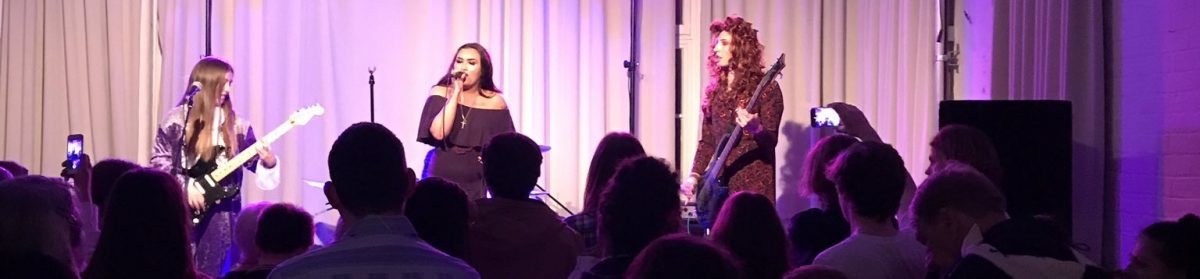
This show was a benefit concert for the Minnesota Dance Theatre and it also featured the first appearance of guitarist Wendy Melvoin in The Revolution.
Prince was further established as a figurehead for pop music during the 1980’s. All five singles off the album became worldwide hits along with the huge success of the movie with the same name as the album and tour. With this album alone, Prince has become one of the biggest and most recognised music artists worldwide.
The whole concept behind ‘Purple Rain’ was to showcase Prince’s many talents.
Musically, most of the tracks off ‘Purple Rain’ are generally regarded as the most pop-orientated of Prince’s career, although several key elements lean towards more experimental records. Prince then went ahead to release and produce after ‘Purple Rain’.
In addition to the album’s breakthrough sales at the time, music critics noted the very innovative and highly experimental aspects of the soundtrack’s music. A good example of this would be the spare, bass-less track titled ‘When Doves Cry’. This track alone set out against the hyperactive American backbeat, which at the time was reminiscent of the latter-day rock and the predominant features of Prince as a musician.
The sold-out show, which raised $23,000 for the company, was also his first appearance in his home town since his triumphant 1999 tour, which ended in April. During which he reached the top 10 in the albums and single charts for the first time and it also made the hard-fought leap to becoming an A-list popstar. At the event there was significant coverage, enough to grab the attention of The Rolling Stone, which covered the performance in its ‘Random Notes’ section.
They noted that “the mini-skirted Wendy” had replaced the previous guitarist Dez Dickinson, the item said that Prince and his band “swung into a ten song (actually eleven) act, including new tracks entitles ‘Computer Blue’, ‘Let’s Go Crazy’, ‘I Will Die For You’, ‘Electric Intercourse’ and a cover of Joni Mitchell’s ‘A Case Of You’. Then he encored with an anthemic and long new one called ‘Purple Rain’. Prince looked toned up from workouts with the Minneapolis choreographer John Command, who’s plotting the dance numbers for the film Prince has dreamed up.
Prince hadn’t necessarily planned on using the First Avenue recordings on the actual album, but when he listened back to the tapes, he found that some of the new songs sounded good, in both performance and audio quality.
Incredibly, not only “Purple Rain,” but also two other songs that were debuted that night—”I Would Die 4 U” and “Baby I’m a Star”—wound up being used on the final Purple Rain soundtrack (though the others were reworked more extensively than the title song was). The show gave a major running head start to a film project that continued to seem like a pipe dream to most of the people involved. To the musicians, it still wasn’t clear where the whole thing was headed.
Almost exactly one year later, on July 28, 1984, Purple Rain opened in 900 theaters across the United States. It made back its cost of $7 million in its first weekend and went on to clear nearly $70 million at the box office. The soundtrack album has sold more than 20 million copies worldwide and spent 24 consecutive weeks at Number One on Billboard’s album chart. It won two Grammys and an Oscar and included two Number One singles (“When Doves Cry” and “Let’s Go Crazy”) and another, the title track, that reached Number Two.
In retrospect, maybe the Purple Rain phenomenon seems inevitable. Prince was the greatest pop genius of his time—on a very short list of music’s most gifted and talented figures—and it was just a matter of his finding the platform that would translate his amazing abilities to a wider audience. Yet, when you look closer, the fact that the Purple Rain movie got made at all is hard to imagine and very difficult to explain to others, and as a result of many extraordinary leaps of faith on the part of virtually everyone who took part within the production.
Prior to this release, Prince was nowhere near a household name: While he had established himself in the R&B community, he had just one album that could be considered a mainstream hit, and no singles that had peaked above Number Six on the pop charts. He was also shrouded in mystery, surrounded by rumors about his ethnic background and sexual preference, and had completely stopped talking to the press as of the release of his previous album, 1999.
Every pop star presumably has some feelings of ambivalence about his or her biggest moment or defining hit. It immediately becomes both an obligation whenever you perform and the marker of a career pinnacle that, by definition, you can never match. Prince had a long run as one of the most successful musicians in the world and can still sell out an arena pretty much whenever he wants to. He’s had an impressive half-dozen records certified two- to four-times platinum, with 1999 (which predated Purple Rain) highest on that list, but he has never had an album with sales close to Purple Rain’s 13 million in the US. Indeed, he once described Purple Rain as “my albatross—it’ll be hanging around my neck as long as I’m making music.”
Whatever his feelings about the legacy of Purple Rain, though, Prince has always kept its songs front and center in his shows—especially the title song. It has served as the pinnacle of most of his concerts, including his 2007 Super Bowl halftime show in Miami, which was seen by 93 million people in the US alone and is generally considered the gold standard of all performances at sporting events.
From all of Prince’s groundbreaking work, it is Purple Rain that endures it first and foremost. It will always be the defining moment of a magnificent, fascinating and often erratic career for any artist that manages to recreate Prince’s sheer success. Its success, on screen and as a recording, was a result of the supreme confidence, laser-focused ambition, and visionary nature of the most gifted artist of his generation.
Dancing on the line between fact and fiction, Prince utilized his mysterious persona to hyper-charge the film’s story with tension and revelation. He let us in — only partway, certainly not enough to rupture his myth, but more than he ever did before or since. Defying all odds, a group of inexperienced filmmakers and actors, working against the clock and against the brutal Minneapolis weather, clicked for just long enough to make a movie that the public was starving for, even if they didn’t quite know it at first.
Purple Rain came along at precisely the right moment — not just for Prince himself, but for the culture that surrounded the album at the time. The summer of 1984 was an unprecedented season, a collision of blockbuster records and the ascension of music video that created perhaps the biggest boom that pop will ever experience. It was also a time of great transformation for black culture, when a series of new stars, new projects, and new styles would forever alter the racial composition of music, movies, and television.
While the sheer excellence of Purple Rain’s songs remains clear 30 years later, the album and the film were in sync with the time and place in which they were created, and their triumph was partly the result of impeccable timing and circumstances that could never be repeated or replicated.
 Ellie Thornton Music